Linda & Marc
Linda & Marc
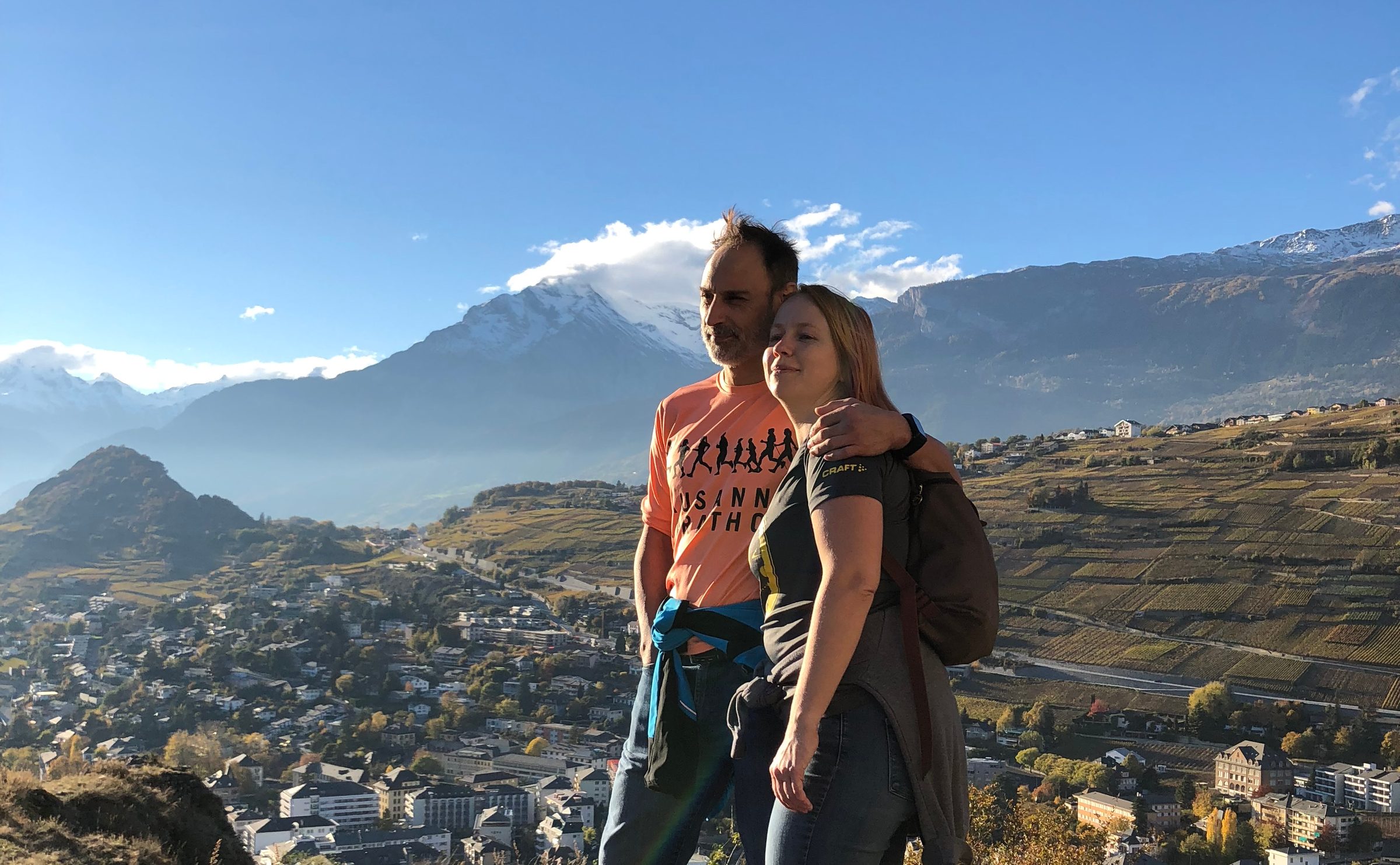
We are Linda and Marc, with seven children between us, all grown now. We came to Pinterlude by different roads: Linda through buildings and books, Marc through rocks, numbers and long trails. Each of us went back to university as an adult, in Lausanne, and neither of us has stopped learning since. The roads now meet in the same places, and Pinterlude is where we compare notes. Here are our two stories.
Linda
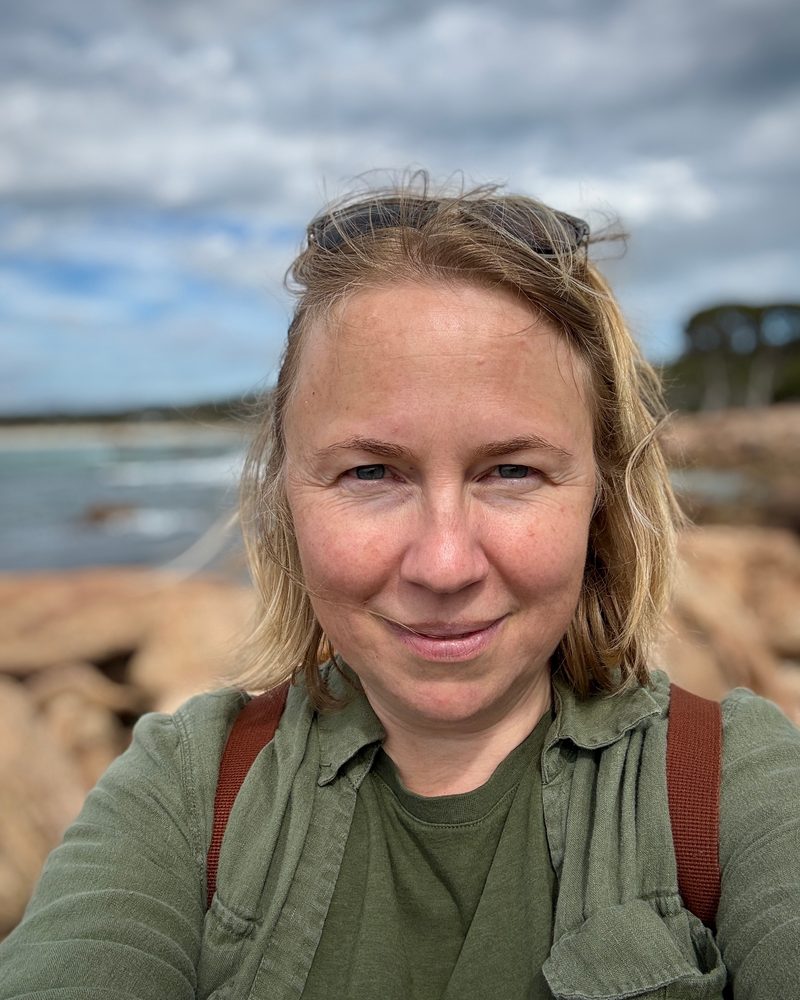
I was born in the Soviet Union. My grandparents were creative, generous people. From them I inherited curiosity and a restless love of words.
Languages came early. English, French, Italian. Growing up behind the Iron Curtain, they were my way of reaching a world I couldn’t yet visit.
By fifteen, I was one year short of a diploma. Empires have terrible timing. In 1993, we moved to the United States. I carried with me my languages and the quiet suspicion that home would always be a plural noun. I landed in New York, where I studied, worked, and discovered that starting over is itself a skill.
In 1997, I crossed the Atlantic again. This time to French-speaking Switzerland, where I would spend the next twenty-seven years. Europe opened everything. Every border crossing was an education. Not in geography, but in how differently people think, eat, love, and disagree. Switzerland gave me structure and precision. The rest of Europe gave me flavors, friendships, and the understanding that there is never just one way to live.
I founded two architectural firms in Switzerland. A decade of luxury construction, high-end international clients, and the kind of projects where discretion mattered as much as design. The buildings were beautiful, but what I really built was an understanding of how complexity works. How to sit in a room with engineers, lawyers, and clients — in three languages — and find the one sentence that unlocks everything. How to read a contract the way I read novels: between the lines. It was creative work in the truest sense: turning someone’s vision into something tangible.
One degree was not enough and the dream of returning to university never quite went away. One day, I stopped postponing and enrolled. A bachelor’s in English, then a master’s in English and literary translation, earned while working, teaching, and raising children. Apparently, I don’t know how to do things one at a time.
The world changes and not always for the best, so I became an interpreter. For two years, I worked with Ukrainian families displaced by war. It was the most humbling work I have ever done. It was also the most meaningful.
My ideal life — and increasingly, my actual life — is one of slow, permanent discovery. Not the kind of travel where you visit five capitals in a week and take photographs to prove you were there. The kind where you stay long enough to learn which bakery opens first, where the locals go when it rains, and how to say thank you in a way that sounds like you mean it.
On Pinterlude, places are read like plots, in both senses of the word, and in several languages at once. Some places inspire a book or a painting; others end up inside one. The stories here follow the threads between a place and the work it shaped.
Linda
Marc
I was born in Perpignan and grew up a few kilometers outside it, in the corner of France where Catalan can still be heard at the market. The Pyrenees sat on the horizon every day, and I wanted to know how they had been built. That took me to Earth sciences, from Montpellier to Paris, and on to a Ph.D. at EPFL in Lausanne.
In 2000, I did what many scientists do when they find they prefer explaining to discovering: I became a teacher. For twenty-four years, I taught mathematics and science in Lausanne. I wanted my students to feel that mathematics is not a corridor of closed doors, but a house with windows everywhere. A classroom is a laboratory where the experiment starts again every morning at eight. It is still the hardest lab I have worked in.
Around my twentieth year of teaching, the curiosity that had once pulled me toward rocks moved to lungs, muscles, and the mechanics of human effort. I did something that felt both reckless and inevitable: I went back to university at fifty-two, this time for sports science, to study how athletes breathe.
Behind all the degrees and lab hours, there’s a simpler truth: I’m a Frenchman who spent nearly three decades becoming Swiss, only to start becoming American. Each move taught me that starting over is not losing what you had. It is finding out what you can carry.
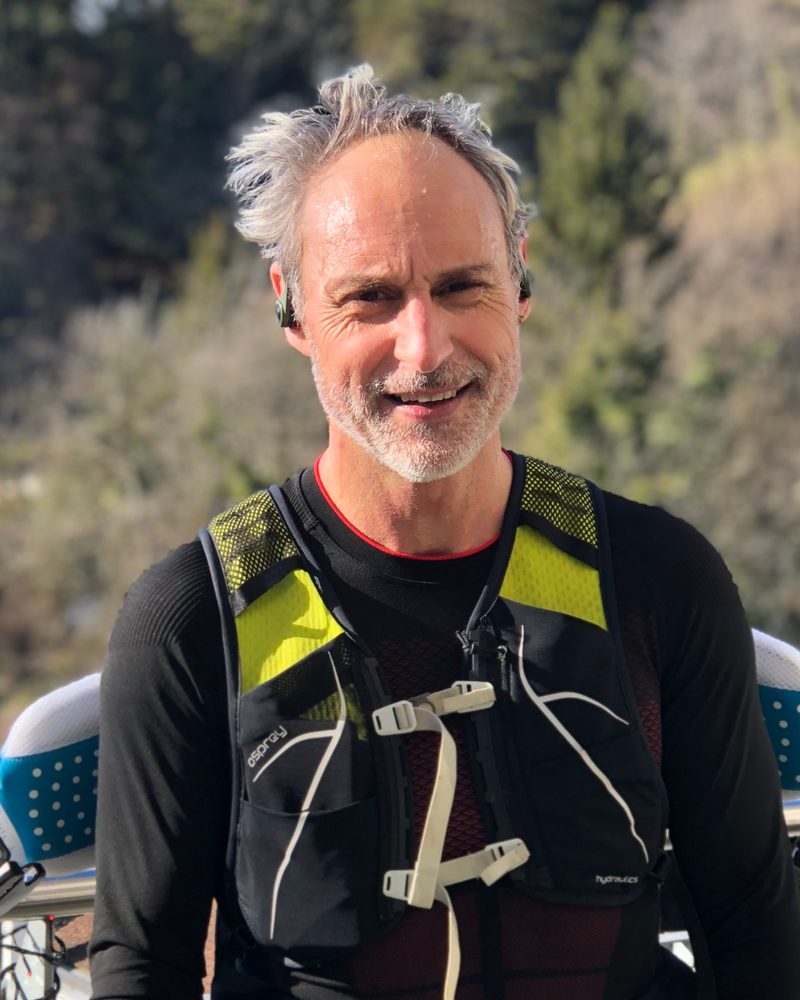
I run most days, often at night, and I am happiest on long trails where the day turns into night and back again. Somewhere around kilometer eighty, alone on a ridge at three in the morning, something changes. Time slows to the rhythm of your breathing and the crunch of gravel underfoot, and a fox or a chamois crossing your headlamp feels like a meeting. People talk to me about meditation. I have never found anything closer to it than those white nights in the mountains. The mountains also have opinions about plans: I have started the 100-mile distance four times and have yet to finish it.
On Pinterlude, the world is discovered at a run. Wherever we travel, I lace up and head out. A new town opens street by street, a mountain trail by trail, at the pace of a stride. Running is how I get to know a place: its terrain, its corners, the effort it asks.
Marc
Write to us
pinterlude@gmail.com